A construction and demolition container is the right choice when a Chicago jobsite generates mixed building debris faster than a crew can bag it. The five sizes cover most jobs: the 10-yard ($595) holds roughly 4…
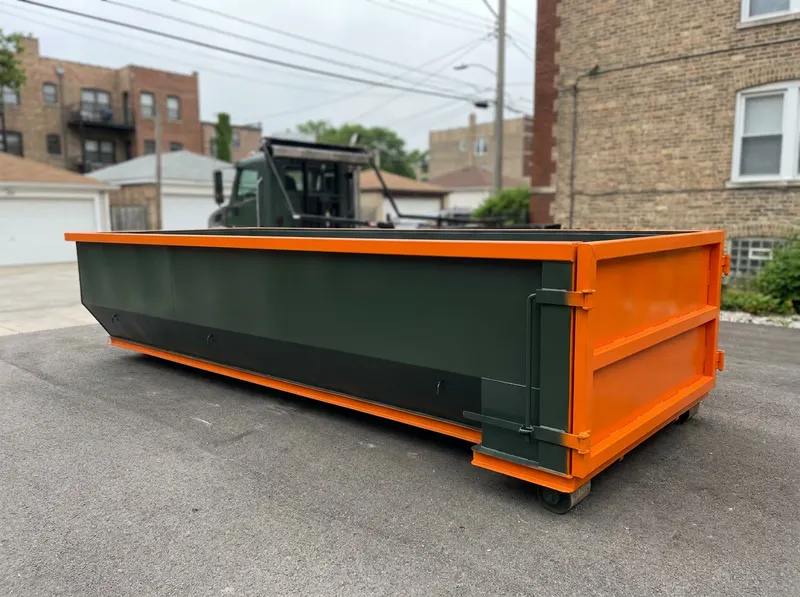
A construction and demolition container is the right choice when a Chicago jobsite generates mixed building debris faster than a crew can bag it. The five sizes cover most jobs: the 10-yard ($595) holds roughly 4 pickup-truck loads and suits a single-bathroom tear-out in a Logan Square two-flat; the 20-yard ($695) handles a kitchen gut or a mid-size renovation in Lincoln Park; and the 40-yard ($895) absorbs a full house gut or a Bridgeport commercial build-out. The trade-off is simple prose, not a chart: a smaller box costs less and fits a tight Avondale driveway, while a larger box costs more but saves the swap fee and downtime on a big demo.
If the debris is bulky and light - framing lumber, drywall, cabinets - size up on volume; if it is dense - tile, plaster, brick - a lower, wider load fills the weight before it fills the space.
Chicago sites bring their own friction, and Boxcar Dumpster Rental plans around it. Many lots in Pilsen, Portage Park and Beverly only have alley access or a narrow driveway, so the delivery truck needs about 60 feet of straight clearance to set a roll-off cleanly. Boards are placed under the container to protect an asphalt or paver driveway from the steel rails.
When the only spot is the public street, the container sits on city property and that requires a permit - Step 1 is to tell us the address so we can flag whether a Chicago Department of Transportation public-way permit applies before the box arrives.
Here is how a C&D rental runs. Step 1: call or text the address, job type and estimated debris so the right size is matched. Step 2: the flat price is confirmed - 10-yard through 40-yard - with the dump fee already built in.
Step 3: the roll-off is delivered and positioned on boards, usually same or next day. Step 4: the crew loads it over the rental period, keeping the top below the fill line so the truck can legally haul it. Step 5: pickup is scheduled, and construction debris is hauled to a permitted transfer station where construction and demolition materials are sorted for recycling where possible.
Clean concrete, brick and asphalt are often recycled as aggregate under Illinois EPA guidance.
A dumpster rental is not junk removal: the crew drops the container and hauls it, but the customer or their contractor loads it. What a C&D box cannot take matters as much as what it can. Keep out household hazardous waste, paint, solvents, asbestos, tires, appliances with refrigerant and any sealed drums - those follow separate disposal rules.
Asbestos-containing material in older Edgewater and Rogers Park buildings must be abated and documented under OSHA asbestos rules before demolition, and it never goes in a general C&D load. Roofing tear-offs run heavy, so a tight roof-shingle job often fills a 20-yard faster than a crew expects; a roofing contractor can estimate bundle weight in advance. For large commercial demolition, work should align with federal demolition notification requirements.
Debris weight is measured in tons at the transfer station, consistent with how a licensed solid waste facility reports loads, but with flat pricing the customer never sees a surprise tonnage line on the invoice.
Every job gets a firm, written price after an on-site visit.
Tell us about your construction & c&d dumpster rental job in Chicago and we'll send a clear, written quote, usually the same day.
 Boxcar Dumpster Rental